
Advanced Spinal Fusion Techniques for Disc Degeneration and Spinal Instability
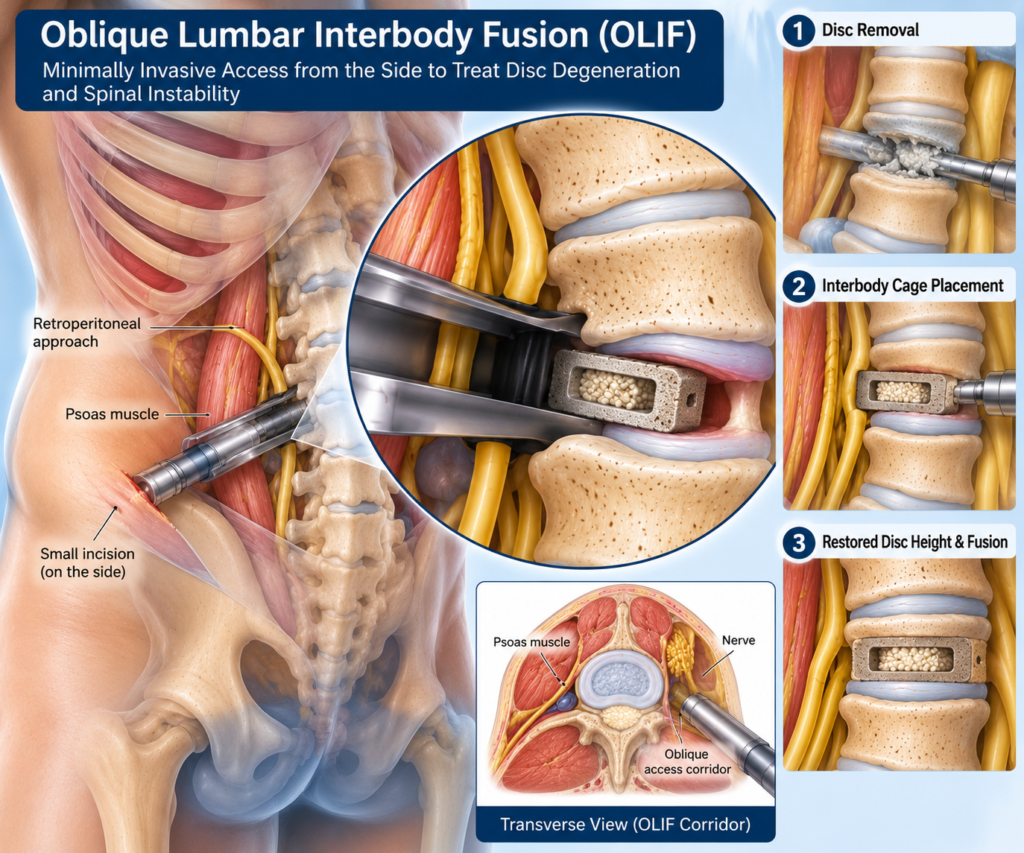
OLIF is a minimally invasive spinal fusion technique that accesses the lumbar spine through an oblique approach from the side of the abdomen. The surgeon removes the affected disc and places an interbody cage containing bone graft material to help the adjacent vertebrae fuse.
In selected patients, OLIF may help restore disc height, improve spinal alignment, and support indirect decompression of affected nerves.
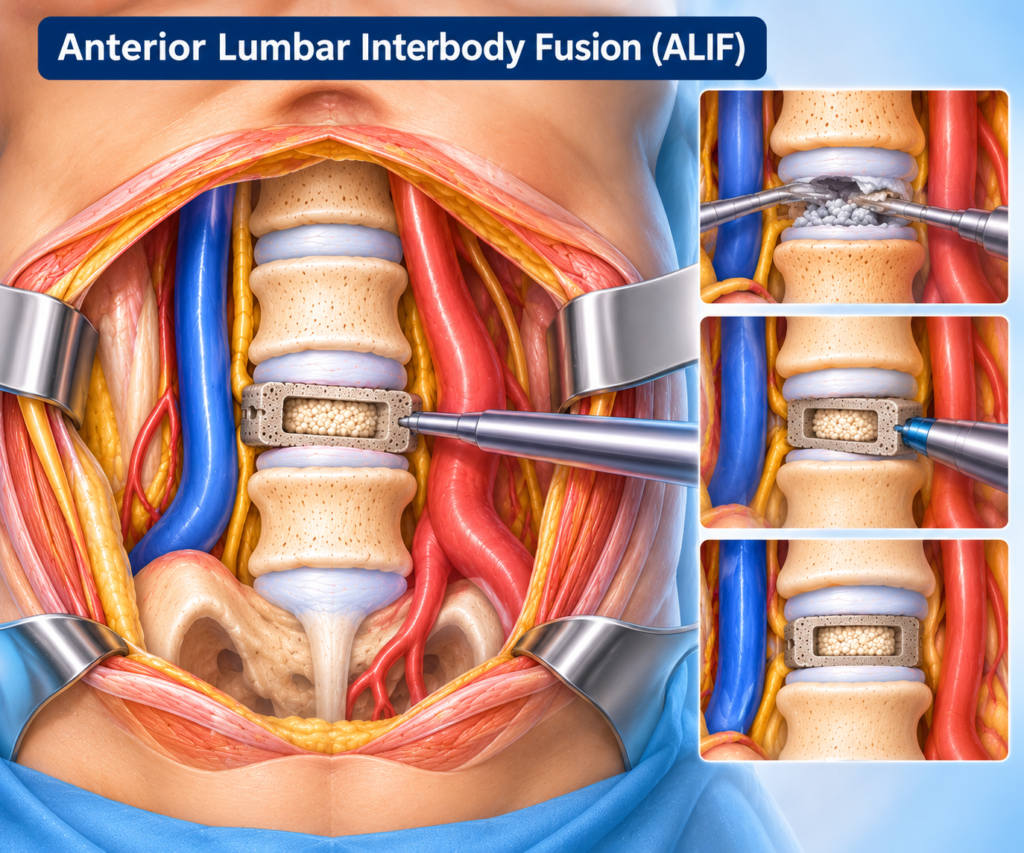
ALIF is a spinal fusion procedure performed through an approach from the front of the abdomen. The damaged disc is removed and replaced with an interbody implant and bone graft material to promote fusion between the vertebrae.
ALIF may be considered for selected cases of degenerative disc disease, spinal instability, and certain conditions requiring restoration of disc height or spinal alignment.
The choice between OLIF, ALIF, and other fusion techniques depends on the patient’s anatomy, diagnosis, and surgical requirements.
Dr. Nikhil Arbatti may evaluate patients with:
A detailed examination and appropriate imaging are essential to determine whether OLIF or ALIF is suitable.
When clinically indicated, potential benefits may include:
Both procedures have specific risks and limitations. Neither technique is suitable for every patient, and outcomes vary.
The procedure generally involves:
1
2
3
4
5
6
The exact technique depends on the patient’s condition and surgical plan.
If you are struggling with back pain, don’t delay treatment. At Advanced Spine Care Clinic, Vile Parle West, Mumbai,
First Sub Title
Second Sub Title
Third Sub Title


OLIF approaches the lumbar spine from an oblique direction through the side of the abdomen, while ALIF accesses it from the front. The appropriate technique depends on spinal anatomy, the condition being treated, and surgical considerations.
Both use approaches that can reduce disruption to the posterior spinal muscles. The incision size, extent of tissue dissection, and overall invasiveness vary depending on the technique and individual case.
Not in every case. The need for fusion depends on the underlying condition and whether additional stability is required.
They may be considered for selected cases of degenerative disc disease, spondylolisthesis, spinal instability, disc space collapse, and certain alignment problems.
Recovery varies according to the procedure, number of spinal levels treated, overall health, and whether additional stabilisation is required. Bone fusion takes several months, and activity is increased according to the surgeon’s instructions.
Dr. Nikhil Arbatti provides specialised spine care at Advanced Spine Care Clinic, Vile Parle West, Mumbai, including evaluation for spinal fusion and minimally invasive treatment options.
Specialised Spine Care: Assessment of degenerative disc disease and spinal instability.
Individualised Treatment Planning: Recommendations based on symptoms, examination, and imaging.
Surgical Approach Evaluation: Assessment of whether OLIF, ALIF, or another procedure may be appropriate.
Comprehensive Management: Guidance on treatment options and postoperative recovery.
If you are searching for a spine surgeon in Vile Parle, Mumbai, consult Dr. Nikhil Arbatti to understand your diagnosis and available treatment options.

Degenerative disc disease and spinal instability can affect mobility and quality of life. A detailed assessment helps determine whether non-surgical treatment, OLIF, ALIF, or another surgical approach is appropriate.
Consult Dr. Nikhil Arbatti, Spine Surgeon in Mumbai, at Advanced Spine Care Clinic, Vile Parle West, to discuss your condition and personalised treatment options.
Advanced Spine Care Clinic in Vile Parle West, led by Dr. Nikhil Arbatti, spine surgeon, provides expert non-surgical and surgical spine care in Mumbai.
Kyphosis
Degenerated Disc
Spondylolysis
© 2026 Advanced Spine Care Clinic Developed by DMark Solutions